Fence Repair vs Replacement: Which Option Saves More Money?
When your backyard boundary starts to sag, rot, or lean, every homeowner faces the exact same financial dilemma: fence repair vs replacement. You look at the weathered wood or cracked vinyl and wonder, “Should I just patch it up, or is it time to tear it down?” Choosing between fence repair vs replacement isn’t just an aesthetic choice; it’s a major financial decision. Homeowners often stress over fence repair vs replacement because making the wrong call can drain their bank accounts. In this comprehensive guide, we will break down fence repair vs replacement cost factors so you can determine which route saves more money long-term. Deciding on fence repair vs replacement requires analyzing material lifespans, structural integrity, labor costs, and long-term return on investment.
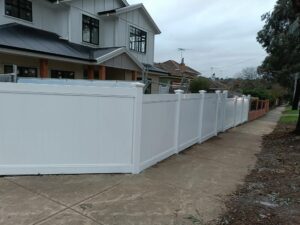
1.Fence Repair vs Replacement: Which Option Saves More Money?
To make an informed decision, you must first understand the baseline costs associated with both options. Property maintenance is all about balancing immediate out-of-pocket expenses against future recurring costs.
Upfront Costs: Fixing vs. Buying New
-
Fence Repair: On average, hiring a professional to repair a damaged section of a fence ranges from $250 to $800, depending on the extent of the damage and the material. If you are dealing with a few broken pickets or a single sagging post, repairing is undeniably cheaper upfront.
-
Fence Replacement: Completely tearing down an old fence and installing a new one is a major capital investment. Homeowners typically spend between $2,000 and $6,500 for a standard backyard installation.
At first glance, patching up the damage seems like the obvious money-saver. However, the upfront price tag is only half the story. If you end up repairing a failing structure every single year, those cumulative repair bills will quickly outpace the cost of a one-time replacement.
2. The Financial Reality of Fence Repair vs Replacement
Repairing a fence is the most economically sound choice when the damage is localized, minor, and the structural foundation of the fence remains healthy.
Quick Cost Breakdown: Good Candidates for Repair
-
1-2 Rotting or Broken Pickets: $5 – $20 per picket (DIY)
-
Sagging Gate Hardware / Hinges: $50 – $150 (Parts & Labor)
-
Loose Post Screws or Brackets: $20 – $50 (DIY Maintenance)
-
Small Section Damaged by Fallen Limb: $150 – $400 (Professional Patching)
The 20% Rule of Thumb
A reliable industry standard used by professional contractors is the 20% Rule. If the cost to fix your current fence is less than 20% of the total cost to replace the entire fence system, you should choose repair.
For example, if replacing your entire wooden boundary costs $4,000, and a contractor quotes you $500 to reinforce two unstable posts and replace a handful of warped boards, repairing saves you a net total of $3,500 today. If you want to dive deeper into budgeting for these minor fixes, check out our comprehensive guide on [affordable backyard fencing repair solutions] (Suggested Internal Link: Your Website’s Repair Service Page).
3. Structural Signs You Need a Total Fence Replacement
There comes a tipping point where pouring money into an old, decaying fence is the equivalent of throwing cash into a burning pit.
Widespread Structural Failures
If more than 20% to 30% of your fence panels are rotting, splitting, or leaning dangerously, the structural integrity of the entire system has been compromised. The most critical component of any fence is the post network. When fence posts rot below the ground level or snap due to high winds, the entire line loses its wind resistance.The Fence Health Assessment MatrixFollow this step-by-step structural check to determine the current state of your boundary:
The Fence Health Assessment Matrix
Follow this step-by-step structural check to determine the current state of your boundary:
-
Scenario A: Main posts are rotted, shifting, or snapping at ground level
-
👉 Verdict: Critical structural failure $\rightarrow$ MUST REPLACE
-
-
Scenario B: The main post network remains strong and vertical (Structural Integrity OK)
-
Next Step: Calculate the total percentage of surface damage across the entire baseline (Check Damage %):
-
🔹 Under 20% of total damage: The fence is highly salvageable $\rightarrow$ CHOOSE REPAIR
-
🔸 Over 20% to 30% of total damage: The structure is systematically failing $\rightarrow$ CHOOSE REPLACE
-
-
Material Lifespans: Are You Past the Expiration Date?
Every material has a natural expiration date. If your fence has reached the end of its functional life, trying to repair it is a losing battle.
-
Untreated Wood: 7 to 10 years.
-
Pressure-Treated Wood: 15 to 20 years.
-
Chain Link: 15 to 25 years.
-
Vinyl: 20 to 30+ years.
-
Wrought Iron / Aluminum: 30 to 50+ years.
If you have a pressure-treated pine fence that is 18 years old and starting to lean, repairing one section this month will only delay the inevitable collapse of another section next month. Investing in a brand new installation resets your property’s maintenance clock to zero. To get an accurate idea of what a complete overhaul looks like, explore our detailed price breakdown tool for a [new fence installation cost estimator] (Suggested Internal Link: Your Website’s Installation Pricing Page).
4. Material Breakdown: Fence Repair vs Replacement Costs
The type of material your fence is made of dictates both the frequency of maintenance and the total cost of ownership. Let’s analyze the financial dynamics of the three most popular fencing materials.
Wood Fencing
Wood is highly susceptible to environmental elements, moisture, termites, and dry rot.
-
Repair Scenario: If a heavy storm knocks down one panel, but the rest of your cedar fence is beautifully maintained, clean, and structurally sound, a quick repair is ideal.
-
Replacement Scenario: If moisture has traveled up from the dirt into the base of the wood posts, causing the wood to crumble, patching the pickets won’t fix the underlying issue. Replacement is mandatory.
Vinyl (PVC) Fencing
Vinyl is highly durable and virtually maintenance-free, but it is prone to cracking under extreme impact (like a rogue lawnmower or a fallen tree branch).
-
Repair Scenario: Modern vinyl fences are built using interlocking components. If a single rail or picket cracks, you can snap it out and slide a replacement piece in easily.
-
Replacement Scenario: Older, first-generation vinyl fences become intensely brittle due to UV exposure over decades. If your old vinyl fence shatters easily upon impact, the chemical composition has degraded, requiring a full replacement.
Chain Link Fencing
Chain link is incredibly resilient, but it lacks privacy and can suffer from rust over time.
-
Repair Scenario: If a tree limb bends the top rail, a contractor can cut out the damaged pipe and sleeve in a new piece of rail within an hour.
-
Replacement Scenario: If the galvanized zinc coating has worn off and the entire mesh web is covered in orange, structural rust, the wire fabric will warp and sag, making a total replacement necessary.
5. The Hidden Financial Factors Homeowners Forget
When running a cost analysis on fence repair vs replacement, do not make the mistake of looking only at the immediate contractor invoices. Consider these long-term hidden financial variables:
Curb Appeal and Property Value
According to real estate data compiled by the National Association of Realtors, an attractive, secure backyard fence drastically boosts a home’s marketability. A patched-up, mismatched fence looks messy and signals to potential homebuyers that the property has been neglected, driving down offers. Conversely, a clean, professionally installed new fence offers a solid return on investment (ROI) by maximizing your home’s equity.
The Value of Your Personal Time
If you choose the DIY repair route to save a few dollars, you must calculate the value of your free time. Spending three consecutive weekends digging out concrete footings, trips back and forth to the hardware store, and mixing cement is exhausting work. If your time is valuable, paying for a professional replacement that comes with a multi-year warranty is often the smarter financial move.
Homeowners Association (HOA) Fines
If you live within a neighborhood governed by an HOA, leaving a poorly repaired or visibly aging fence standing can result in recurring monthly fines. Sometimes, replacing the fence with an approved, durable material is the only way to avoid ongoing penalties.
6. How to Make the Final Decision: The Maintenance Matrix
To find out exactly which option will save you the most money over the next 5 to 10 years, use this quick checklist:
-
Is the damage isolated to less than 20% of the fence? (Yes = Repair | No = Replace)
-
Are the main fence posts structurally sound and vertical? (Yes = Repair | No = Replace)
-
Is the fence material younger than its expected lifespan? (Yes = Repair | No = Replace)
-
Are replacement parts readily available on the market? (Yes = Repair | No = Replace)
If you answered “No” to two or more of these questions, a complete replacement is the path that will save you more money over time.
Conclusion: Tallying the True Winner
In the battle of fence repair vs replacement, the short-term winner is almost always fence repair. It keeps cash in your pocket today and resolves immediate safety concerns for your kids and pets.
However, if your fence is structurally compromised, rotting from the ground up, or past its prime operational age, repeated repairs are simply an expensive band-aid. In those common scenarios, investing in a high-quality, professional fence replacement saves you significantly more money by eliminating recurring repair bills, lowering maintenance hours, elevating your home’s resale value, and giving you long-term peace of mind.