How Long Does a Timber Fence Last? Ultimate Timber Fence Lifespan Melbourne Guide
When assessing property boundaries, understanding the true timber fence lifespan Melbourne homeowners experience is a critical first step. Several environmental elements dictate the exact timber fence lifespan Melbourne installations yield over time. Calculating the typical timber fence lifespan Melbourne averages provide helps secure your residential investment. If you ignore local weather patterns, your timber fence lifespan Melbourne expectations might fall short. Therefore, tracking the specific timber fence lifespan Melbourne projects deliver ensures long-term property durability. Ultimately, maximizing your timber fence lifespan Melbourne projection requires premium materials.
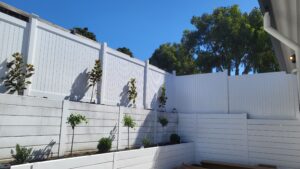
What is the Average Timber Fence Lifespan Melbourne Homeowners Expect?
Evaluating a realistic boundary timeline requires breaking down structural choices by wood species. In the volatile climate of Victoria, a standard barrier can last anywhere from 15 to 30+ years. However, this wide window depends heavily on timber grading, structural installation techniques, and routine maintenance.
To help you plan your property assets, we have compiled a 2026 market matrix outlining typical performance expectations across Melbourne suburbs.
| Timber Material & Type | Treatment Class | Average Lifespan (Years) | Primary Degradation Risks |
|---|---|---|---|
| Standard Treated Pine Palings | H3 Class | 15 – 20 Years | UV warping, surface splitting, cupping |
| Treated Pine In-Ground Posts | H4 Class | 20 – 25 Years | Soil moisture rot, subterranean fungal decay |
| Cypress Pine (Untreated) | Natural | 20 – 25 Years | Ground-line moisture, knots splitting |
| Premium Merbau Hardwood | Natural / Class 2 | 25 – 35 Years | Tannin bleeding, lack of regular oiling |
| Ironbark / Spotted Gum | Natural / Class 1 | 35+ Years | Extreme sun checking, structural bracket rust |
Key Factors Affecting Your Timber Fence Lifespan Melbourne Estimates
No two suburban backyards face identical environmental pressures. Consequently, several distinct localized variables will either accelerate wood decay or preserve your boundary line for decades.
1. Timber Treatment Hazards (H3 vs. H4 Classifications)
Understanding chemical preservation classes is vital for predicting durability. Softwoods like radiata pine possess minimal natural resistance against biological threats. Therefore, they must undergo pressure treatment with copper chrome arsenate (CCA) or alkaline copper quaternary (ACQ).
-
H3 Treatment Level: This classification is strictly engineered for above-ground external applications. For instance, your fence palings and horizontal rails use H3 timber. It effectively repels rain and insects but will rot quickly if placed in direct contact with damp soil.
-
H4 Treatment Level: This heavy-duty grade is chemically rated for direct in-ground contact. Fencing contractors must use H4 treated pine for structural posts. If an installer mistakenly uses H3 timber for inground posts, your structural foundations will likely fail within a decade.
2. Geographic Microclimates Across Melbourne
Melbourne is famous for experiencing “four seasons in one day.” However, distinct geographical zones subject structures to vastly different microclimates.
-
The Western Suburbs (e.g., Werribee, Point Cook): These regions feature highly reactive basalt clay soils. These soils expand aggressively during wet winters and contract violently during scorching summers. This constant ground shifting puts immense physical strain on concrete post footings, causing early structural leaning.
-
The Eastern and Dandenong Zones (e.g., Ringwood, Belgrave): These areas enjoy rich, organic soils but experience significantly higher annual rainfall. Persistent dampness creates a breeding ground for wood-rotting fungi and subterranean termites.
-
Coastal Bayside Belts (e.g., Brighton, Frankston): Coastal properties face intense, relentless UV exposure and airborne salt spray. Salt air accelerates the corrosion of standard steel nails and fasteners, leading to loose, rattling palings.
How Construction Quality Shapes Your Timber Fence Lifespan Melbourne Metrics
High-grade raw materials mean very little if the construction execution is sub-standard. Investing in elite workmanship dramatically extends the operational lifecycle of your boundary line.
Post Embedment Depth and Concrete Footings
The structural posts act as the backbone of your entire fencing system. To withstand heavy winds, an 1.8-metre-high fence requires posts buried at least 600mm to 800mm deep into the earth. Furthermore, each post hole must be backfilled with high-grade concrete, sloped away from the timber at ground level. This dome-shaped finish prevents rainwater from pooling around the vulnerable timber base.
The Imperative Role of Plinth Boards
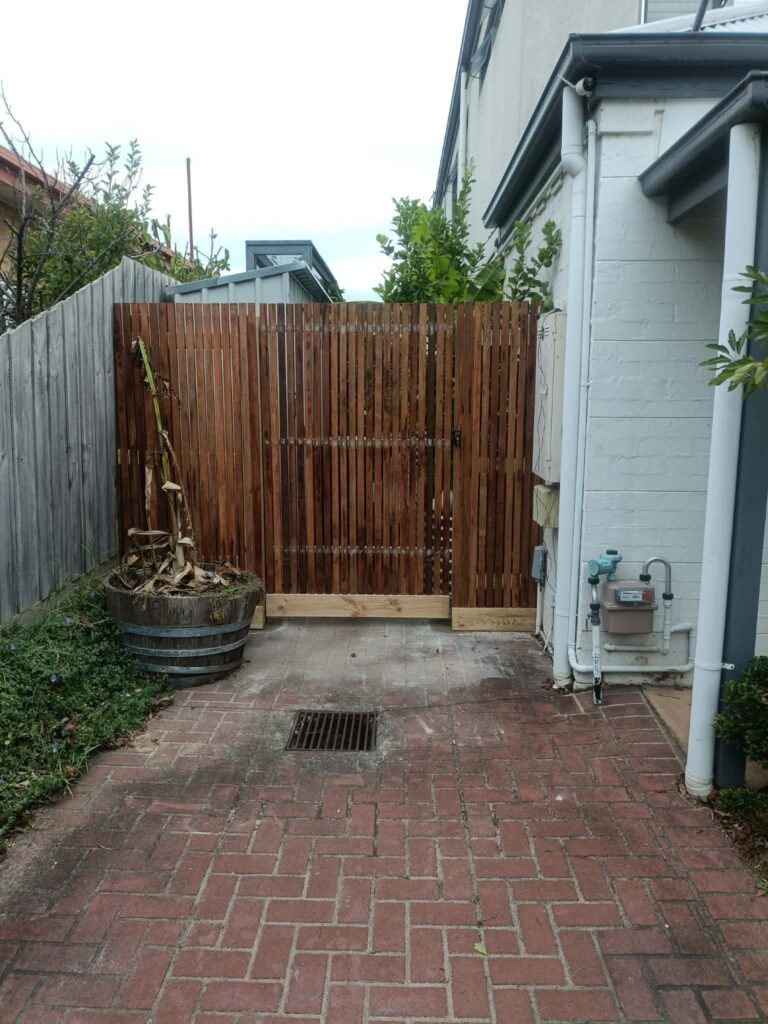
A plinth board is a thick, horizontally installed timber piece running flush along the very bottom of the structure.
Because it sits directly on or slightly below the lawn line, the plinth board bears the brunt of soil moisture and trimmer damage. By isolating the vertical H3 palings from direct ground contact, you protect them from early rot. If the plinth rots out after 10 years, you can easily replace it for a fraction of the cost of a full rebuild.
Fasteners and Hardware Engineering
Over time, cheap fasteners will systematically ruin a beautiful structure. Standard bright steel nails rust rapidly when exposed to atmospheric moisture. This oxidation creates unsightly black streaks down the timber and loosens the structural grip. For maximum longevity, professional installers must use hot-dipped galvanized nails or premium stainless steel screws.
How Maintenance Extends a Timber Fence Lifespan Melbourne Structure
Timber is a natural, organic material that reacts dynamically to its surroundings. Therefore, implementing a proactive upkeep schedule is the single best way to maximize your structural investment.
1. Initial Curing and Sealing Windows
If your brand-new boundary is constructed from treated pine, do not paint or stain it immediately. Pressure-treated timber retains significant internal chemical moisture from the factory. You must allow the wood to cure and dry out completely under the sun for 4 to 6 weeks. Once the timber pores open up fully, it will evenly absorb protective coatings.
2. Staining vs. Painting Lifecycles
Applying a high-quality external coating shields the wood fibers from destructive solar radiation and moisture ingress.
-
Exterior Acrylic Paints: Paint creates an opaque, hard-wearing barrier over the timber surface. A professional-grade paint job can easily last 7 to 10 years before requiring scraping and recoating. However, paint can trap internal moisture if the timber wasn’t fully dry before application.
-
Penetrating Timber Oils and Stains: These products soak deep into the grain, highlight natural wood aesthetics, and prevent cracking. Hardwoods like Merbau or Spotted Gum thrive on oiling. In contrast to paint, stains do not peel. Nevertheless, they volatilize under intense UV rays, requiring a fresh maintenance coat every 18 to 24 months.
3. Vegetation and Clearance Management
Climbing ivy, dense jasmine vines, and overhanging tree branches look beautiful, but they act as moisture traps. Heavy foliage holds damp air against the timber panels, accelerating rot. Additionally, ensure your garden sprinkler systems are angled away from the boundary line to avoid constant wetting cycles.
oppo_34
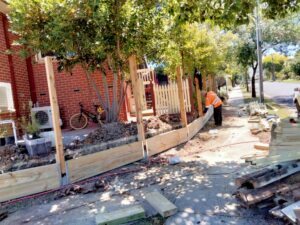
Comparing Colorbond to a Timber Fence Lifespan Melbourne Review
When planning a replacement project, many property owners debate between timber panels and pre-painted steel sheets.
While a premium, well-maintained hardwood layout can match the timeline of steel, standard treated pine generally requires replacement sooner than Colorbond. Colorbond steel structures typically last 25 to 30 years with virtually zero structural maintenance. They are entirely immune to termite attacks and rot.
However, steel lacks the organic, sound-dampening warmth of real wood. If a section of a timber barrier warps or sustains impact damage, you can easily unscrew and swap out individual palings. In contrast, damaged Colorbond requires replacing entire modular panels, which can disrupt your landscaping.
Understanding Victoria’s Shared Fencing Regulations
Boundary lines involve shared responsibilities. In Victoria, these matters are legally overseen by the Fences Act 1968.
Under state law, neighbors are mutually responsible for splitting the construction costs of a “sufficient standard fence.” If an old structure reaches the end of its natural operational lifecycle, you must issue a formal Fencing Notice to your neighbor before commencing demolition.
For comprehensive legal guidelines on issuing notices, managing boundary disputes, or determining what constitutes a sufficient standard structure, consult the official documentation provided by the Victorian Building Authority (VBA).
Frequently Asked Questions About Timber Fence Lifespan Melbourne
Can termites destroy a treated pine boundary fence?
Yes, but it is rare if the wood is treated correctly. The chemical compounds infused into H3 and H4 treated pine are highly toxic to termites and wood-boring beetles. However, if the timber is old, weathered, or handles constant moisture, the chemical protection can leach out over decades, leaving it vulnerable.
Why is my new timber fence warping and twisting?
Warping occurs when wood fibers absorb and release moisture unevenly. As the hot Melbourne sun bakes one side of a damp paling, that side dries and shrinks faster than the shaded reverse side. Applying a protective penetrating stain early minimizes this uneven moisture movement.
Should I choose hardwood or treated pine for longevity?
If your budget allows, Class 1 or Class 2 hardwoods like Ironbark, Spotted Gum, or Merbau offer vastly superior natural density and mechanical strength compared to softwoods. Consequently, they provide a significantly longer structural lifecycle, provided they are oiled regularly.
Secure Your Property Investment with an Onsite Structural Assessment
Predicting the exact timeline of your property boundaries requires an expert eye. A local fencing professional can accurately analyze your specific soil profile, drainage layouts, and wind exposure to engineer a durable structural solution.
Ready to install a boundary barrier built to stand the test of time? Contact our specialized local team today to schedule your comprehensive onsite diagnostic and receive a transparent, itemized quote tailored to your backyard.